Senegal Reforestation
Senegal
About
Senegal lies within the Great Green Wall zone and reflects many of the interconnected challenges faced by smallholder farmers and pastoralist communities across the region. These challenges are complex and reinforcing, creating cycles of environmental decline and economic hardship.
First, the region faces severe food insecurity. The United Nations Food and Agriculture Organization (FAO) estimates that by 2030, Africa could lose up to two-thirds of its arable land if desertification β the spread of arid, desert-like conditions β continues unchecked. As productive land diminishes, farmers struggle to grow enough food to sustain their families and communities.
Second, dryland expansion is accelerating due to the disappearance of trees and vegetation. Overgrazing, declining soil fertility, dependence on fuelwood, and the increasing impacts of climate change all contribute to land degradation, reducing agricultural productivity year after year.
Third, competition over scarce natural resources has led to increased conflict. Farmers and herders are increasingly forced into disputes over access to land and water, further destabilizing already vulnerable communities.
Fourth, livelihoods are under growing pressure. Livestock losses, declining crop yields, and reduced agricultural productivity contribute to widespread malnutrition and economic insecurity.
Finally, these combined pressures drive migration. With limited economic opportunities and a rapidly growing youth population lacking access to meaningful employment, many people are forced to leave their communities in search of stability elsewhere.
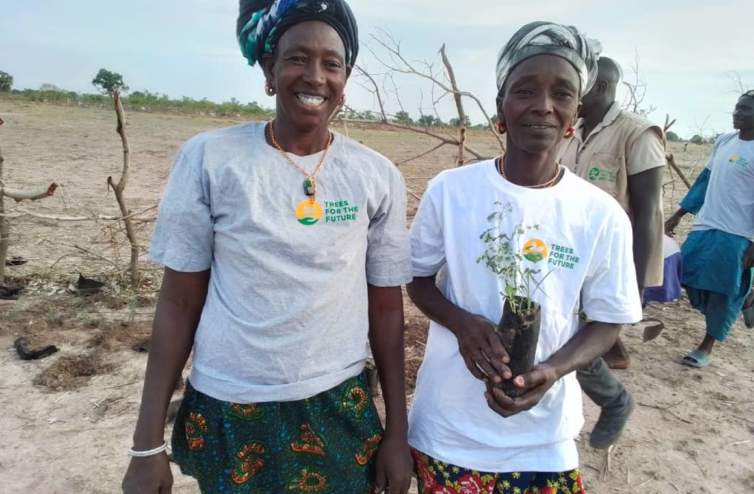
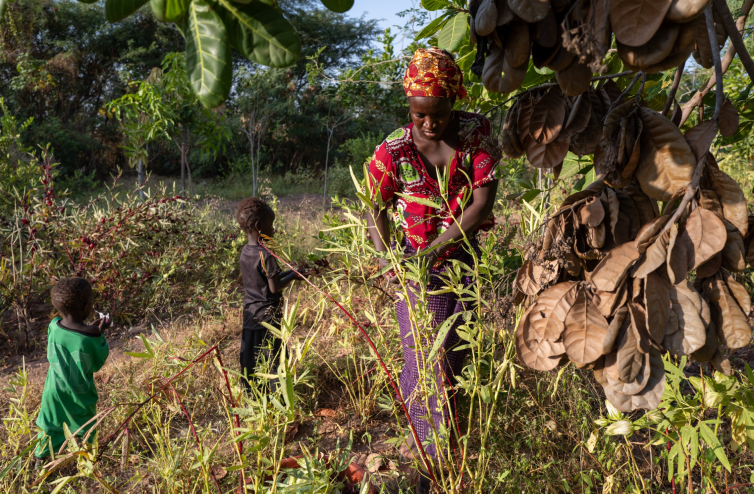
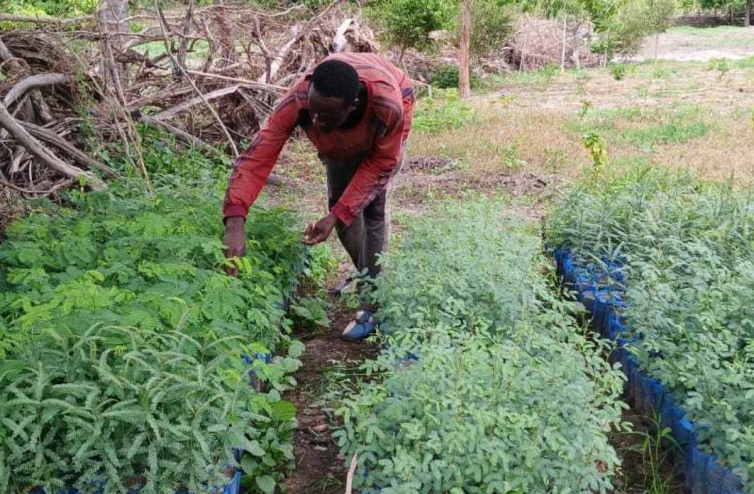
The forest garden model aims to address these interconnected challenges through a single, integrated solution implemented on one hectare of land. TREES works with thousands of farmers across the region to develop forest gardens that restore degraded landscapes through diverse tree planting while simultaneously strengthening local livelihoods. Farmers receive training to improve soil health, cultivate abundant fruits and vegetables, and sustainably grow the natural resources their households depend on most.
Planting Partner
Trees for the Future
Verified Reforestation Partner
Trees for the Future is an international nonprofit dedicated to combating deforestation, restoring degraded land, and improving livelihoods through innovative agroforestry. They work with smallholder farmers in Africa to implement forest garden systems, planting diverse trees alongside fruits, vegetables, and other crops to restore soil fertility, increase food security, and provide sustainable sources of income. Since 1989, Trees for the Future has helped thousands of farmers transform degraded land into productive, resilient landscapes, creating long-term environmental and socio-economic impact.
Images